Custom Die Making | 5 Designing Tools for Precision Parts

Custom die making is essential for producing high-quality, precision parts in industries like automotive, aerospace, electronics, and industrial equipment. Achieving this level of accuracy requires specialized design tools that ensure each die meets exact specifications and performs reliably.
The 5 key designing tools for precision parts that play a crucial role in creating precision dies includes Computer-Aided Design (CAD) software, Computer-Aided Manufacturing (CAM) software, CNC machining centers, Finite Element Analysis (FEA) tools, and 3D scanning and measurement tools.
These tools work together to streamline design, improve accuracy, and guarantee consistent part production. In this article, we’ll explore how each tool contributes to precision die making and why they are indispensable in modern manufacturing.
Understanding Custom Die Making
A die is a specialized tool used to shape, cut, or form materials like metal or plastic. Custom dies are designed for specific parts and production requirements, often requiring tight tolerances and intricate details.
The process of custom die making includes:
- Analyzing engineering drawings
- Designing the die for precise dimensions
- Selecting appropriate materials
- Fabricating and machining components
- Testing and refining the die for production use
Precision in die making ensures that parts are produced consistently, minimizing errors, material waste, and downtime. This is particularly important for high-volume production runs where uniformity and quality are critical.
Top 5 Designing Tools for Precision Die Making
Below are the top 5 designing tools for precision parts that play a crucial role in creating precision dies:
1. Computer-Aided Design (CAD) Software
Computer-Aided Design (CAD) software is the backbone of modern die making. It allows engineers to create detailed 2D and 3D models of dies before fabrication begins.
Key Advantages of CAD in Custom Die Making:
- Accurate visualization of complex geometries
- Easy design modifications and iterations
- Ability to test fit and function virtually
- Integration with downstream manufacturing tools
CAD software ensures that designers can refine every aspect of the die, reducing errors and saving time during production. Common CAD platforms include SolidWorks, Autodesk Inventor, and CATIA, all of which support the development of precision dies for complex applications.
2. Computer-Aided Manufacturing (CAM) Software
Once the design is finalized in CAD, Computer-Aided Manufacturing (CAM) software translates the digital model into machine instructions. These instructions guide CNC machines on tool paths, spindle speeds, and cutting sequences.
Benefits of CAM in Die Making:
- Optimizes machining operations for efficiency
- Reduces the risk of manual programming errors
- Supports complex machining processes
- Enables pre-production simulation
Using CAM ensures that the transition from design to production is seamless, helping to maintain precision and consistency in every die produced.
3. CNC Machining Centers
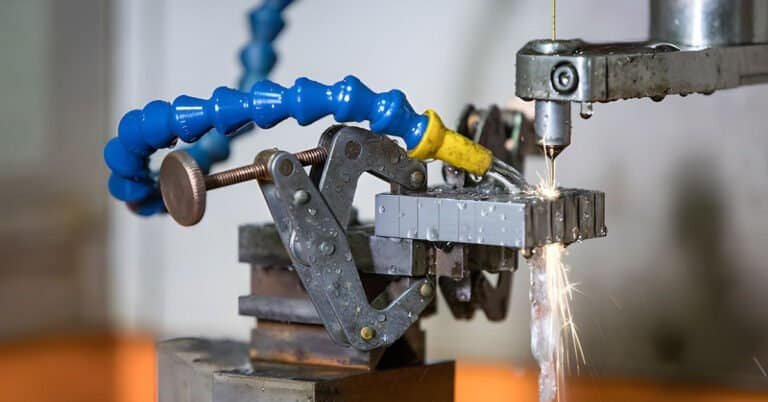
CNC (Computer Numerical Control) machining centers are vital for producing precise die components. These machines follow programmed instructions to cut, mill, drill, and shape materials with extremely tight tolerances.
Why CNC Machines Are Essential:
- High accuracy and repeatability
- Capability to handle complex shapes and contours
- Consistent production quality for high-volume runs
- Automation reduces manual intervention and errors
CNC machining allows manufacturers to produce dies that meet exact specifications, ensuring the final parts are consistent and reliable.
4. Finite Element Analysis (FEA) Tools
Finite Element Analysis (FEA) tools simulate how a die will perform under stress and load. By analyzing factors like pressure, deformation, and strain, engineers can identify potential weaknesses before fabrication.
Advantages of FEA in Die Design:
- Predicts die performance under real-world conditions
- Identifies areas of high stress for design improvement
- Reduces the risk of premature wear or failure
- Helps optimize material usage and structural design
FEA ensures that dies are durable and capable of withstanding production demands, reducing the need for rework or replacement.
5. 3D Scanning and Measurement Tools
3D scanning and digital measurement tools verify that die components match the original design specifications. These tools allow manufacturers to inspect dimensions, detect deviations, and make adjustments before full-scale production.
Uses of 3D Scanning in Die Making:
- Validates component accuracy and tolerances
- Captures complex geometries for inspection
- Supports reverse engineering when necessary
- Ensures consistent quality control
By combining 3D scanning with precision measurement tools, manufacturers can ensure that dies produce parts that meet exacting standards every time.
How These Tools Work Together
A precise die making process relies on combining all five tools effectively:
- CAD: Create detailed designs and visualize the die in three dimensions
• CAM: Convert designs into accurate manufacturing instructions
• CNC Machining: Produce physical components with high accuracy
• FEA: Simulate performance under stress and load to identify potential issues
• 3D Scanning: Inspect and validate components to ensure they meet specifications
Using these tools together ensures consistent quality, reliable performance, and precise results across every production run
Why Quality Assurance Is Critical in Custom Die Making?
Maintaining quality at every stage of custom die production is essential for precision and reliability. Key points to consider include:
Inspection During Fabrication
Monitor dimensions and tolerances while components are being produced to catch issues early.
Post-Production Verification
Use advanced measurement tools to ensure that finished dies match design specifications accurately.
Material Optimization
Quality checks reduce waste and ensure efficient use of materials, saving costs and resources.
Consistency Across Production Runs
Ensures that every die produces parts that meet the same high standard.
Minimizing Errors and Rework
Early detection of deviations prevents delays, reduces production errors, and maintains timelines.
Rigorous quality assurance guarantees precise, reliable, and consistent results, making it an indispensable part of modern custom die making.
Conclusion
Custom die making depends on precision, advanced tools, and expert craftsmanship to produce high-quality, consistent parts. Tools such as CAD, CAM, CNC machining, FEA, and 3D scanning ensure every die meets specifications and performs reliably.
With years of professional experience and a skilled team, we deliver precision solutions that meet the demands of modern manufacturing. To learn more about our capabilities, explore our portfolio, or discuss your custom die requirements, contact our team at Olympic Tool and Die.
Let our experts help bring your designs to life with accuracy and reliability.
FAQs
- What is a custom die?
A custom die is a specially designed tool used in manufacturing to cut, shape, or form materials according to exact part specifications. Unlike standard dies, custom dies are tailored for specific products or production requirements, ensuring precision and repeatability.
- Why are precision tools important in die making?
Precision tools allow manufacturers to create dies that produce consistent, accurate parts. They reduce errors, prevent material waste, and ensure that production meets tight tolerances, which is critical for industries requiring high-quality components.
- How does CAD software help in die making?
CAD software enables designers to create detailed 2D and 3D models of dies. It allows visualization of complex geometries, testing of design fit and function, and easy modifications before production, which reduces errors and saves time.
- What role does CAM software play?
CAM software converts CAD designs into precise instructions for manufacturing machines. It guides cutting paths, tool movements, and machining sequences to produce components accurately and efficiently, improving consistency and reducing manual programming errors.
- Why is CNC machining essential for custom dies?
CNC machining provides high accuracy and repeatability. It allows for the production of complex die components with tight tolerances and consistent quality, supporting both small-scale prototypes and high-volume production runs.
- What is the role of quality assurance in die making?
Quality assurance ensures that all dies meet design specifications and maintain high precision. Through inspection and testing at multiple stages, manufacturers can detect deviations early, optimize material use, and deliver reliable, consistent parts for production.